
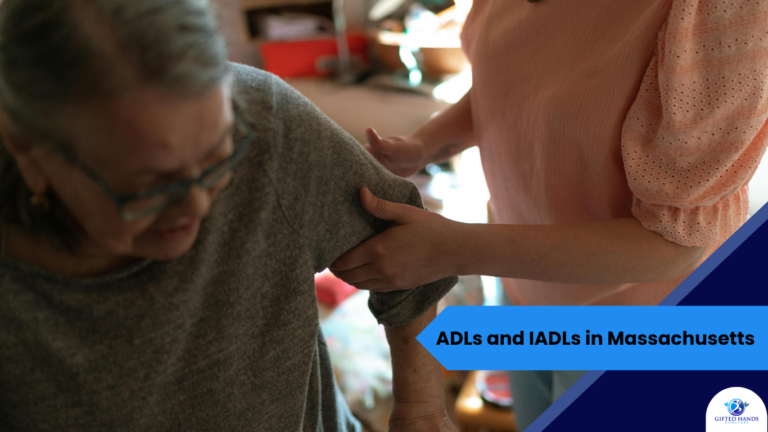
ADLs and IADLs in Massachusetts: What They Mean for MassHealth Home Care
When a loved one starts struggling with daily tasks, two terms come up in almost every conversation about home care: ADLs and IADLs. These two terms come up in every eligibility conversation, every clinical assessment, and every program application. Understanding what they actually mean, and how MassHealth uses them, is the clearest starting point for navigating home care support in Massachusetts.
Why ADLs and IADLs Matter for Home Care in Massachusetts
The ADL assessment is the step that sets everything in motion. It determines whether someone qualifies for home care support, shapes the care plan, and for Adult Foster Care, directly affects the caregiver’s monthly stipend. Getting familiar with these terms before the assessment puts families in a much better position to communicate clearly about the support that is actually needed.
What Are Activities of Daily Living?
Activities of Daily Living, commonly called ADLs, are the basic physical tasks a person needs to complete every day to take care of themselves. They are the most hands-on, most personal tasks of daily life, and they are the primary measure MassHealth uses to assess functional need.
Under MassHealth, the ADLs considered for program eligibility include:
- Bathing and personal hygiene — washing the body, managing grooming such as hair and oral care
- Dressing — putting on and taking off clothing, including managing fasteners
- Eating — the physical act of bringing food to the mouth and swallowing
- Toileting — getting to and from the toilet, managing clothing, and maintaining hygiene
- Transferring — moving from one position to another, such as from a bed to a chair or a chair to a standing position
- Mobility and walking — moving around the home safely and independently
A person does not need to be completely unable to do these things to qualify. MassHealth also considers the need for cueing and supervision throughout an activity. If someone can physically bathe themselves but requires step-by-step prompting and monitoring to do so safely, that counts. This distinction matters and is one that many families do not realize applies.
What Are Instrumental Activities of Daily Living?
Instrumental Activities of Daily Living, or IADLs, are the tasks that support independent living but require more planning, organization, or cognitive functioning than basic self-care. They are generally less physically hands-on than ADLs but are equally important for someone’s ability to live safely at home.
IADLs include:
- Meal preparation — planning, cooking, and cleaning up after meals
- Medication management — organizing, tracking, and taking medications correctly and on time
- Housekeeping — maintaining a clean and safe living environment, including laundry
- Shopping — purchasing food and other essential items
- Transportation — getting to medical appointments and other necessary destinations
- Managing finances — paying bills, managing accounts, and handling paperwork
For MassHealth AFC and GAFC programs in Massachusetts, IADLs are considered alongside ADLs as part of the broader picture of a person’s care needs. A member who needs assistance with at least one ADL or IADL may be eligible for either program. That said, ADLs carry more weight in determining care level and caregiver compensation under AFC.
How ADL and IADL Needs Change Over Time
ADL and IADL difficulties rarely appear all at once. The pattern for most people is that IADLs become harder first. Managing medications, keeping up with bills, or planning and preparing meals may start to slip before bathing or dressing becomes a challenge.
This matters for two reasons. First, IADL decline is often an early signal that more hands-on support will be needed soon. Recognizing it early creates more time to explore options before a situation becomes urgent. Second, IADL needs alone can be part of what qualifies someone for support under MassHealth programs, particularly where cognitive conditions are involved.
When ADL difficulties begin to appear alongside IADL challenges, the level of support needed increases significantly. Families often reach out for help at this stage, and understanding where a loved one is on that continuum helps shape which program in Massachusetts is the right fit.
How MassHealth Uses ADLs to Determine Program Eligibility
To qualify for either AFC or GAFC in Massachusetts, a person must be enrolled in MassHealth Standard or CommonHealth and must require assistance or supervision with at least one ADL or IADL due to a medical, physical, cognitive, or mental condition.
For AFC specifically, MassHealth looks at whether the person needs:
- Hands-on physical assistance with one or more ADLs, or
- Cueing and supervision throughout one or more ADLs in order to complete the activity safely
Behavioral needs are also taken into consideration. For individuals with dementia, Alzheimer’s, autism, or other cognitive conditions, behaviors such as wandering, resisting care, or disruptive conduct are factored into the eligibility and care level assessment. A diagnosis alone does not guarantee eligibility. What MassHealth looks at is the functional impact on the person’s ability to complete daily activities.
For GAFC, the same ADL-based eligibility threshold applies. The person must need hands- on help or full cueing and supervision with at least one ADL daily. Eligibility under GAFC also requires a physician to confirm the functional need as part of the prior authorization process.
ADLs and Care Levels Under AFC and GAFC in Massachusetts
Under the AFC program in Massachusetts, MassHealth assigns one of two care levels based on the ADL assessment. That care level determines the caregiver’s monthly tax-free stipend.
Level 1 applies when a person requires hands-on assistance with one to two ADLs, or requires cueing and supervision throughout one or more ADLs to complete the activity. This level reflects consistent daily care needs that are real but moderate in intensity.
Level 2 applies when a person requires hands-on assistance with three or more ADLs, or assistance with at least two ADLs combined with frequent management of behavioral challenges such as wandering, verbal or physical aggression, or resistance to care. This level reflects more intensive, complex caregiving that goes beyond standard personal care.
For many individuals with cognitive conditions or multiple physical limitations, the combination of ADL needs and behavioral support places them at Level 2. Understanding this before the assessment helps families describe their loved one’s needs accurately and completely.
Under GAFC, the care model is different. A trained aide provides one hour of daily support with ADLs and IADLs in an approved residential setting. GAFC does not have a two-level pay structure in the same way AFC does. The focus is on daily structured support within the housing environment rather than continuous live-in care.
What to Expect During a MassHealth ADL Assessment
The ADL assessment for AFC in Massachusetts is conducted by a registered nurse and care manager from the provider agency, using a standardized MassHealth clinical assessment form. A primary care physician order is also required as part of the prior authorization process.
During the assessment, the nurse evaluates how much hands-on help or cueing is needed for each ADL, any behavioral factors that affect daily care, the safety of the home environment, and the overall picture of the person’s health and daily functioning.
One practical point families often find valuable: be specific and honest during this assessment. It is natural to want to present a loved one in the best light, but underreporting needs can result in a lower care level that does not reflect the real daily situation. If a person needs reminders, step-by-step guidance, or physical assistance to complete a task, that should be communicated clearly. The assessment is designed to reflect the full picture, and the care plan built from it should too.
Get Help with AFC and GAFC Eligibility in Massachusetts
Gifted Hands Homecare is a MassHealth-approved provider in Massachusetts offering both AFC and GAFC programs. We help individuals and families understand ADL and IADL requirements, work through the MassHealth eligibility process, and navigate enrollment from start to finish at no cost.
If you are unsure whether a loved one’s daily care needs meet the threshold for AFC or GAFC in Massachusetts, reach out and we will help you figure out the right next step.